5 Crow’s Feet Solutions That Work Better Than Retinol
6/23/20263 min read
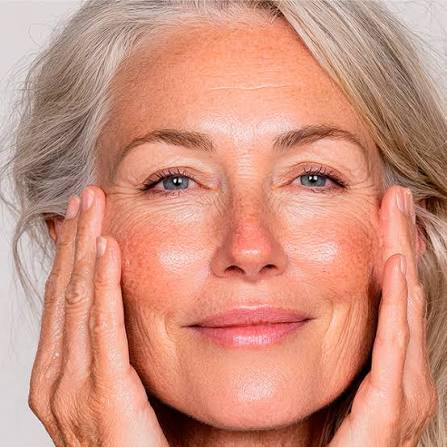
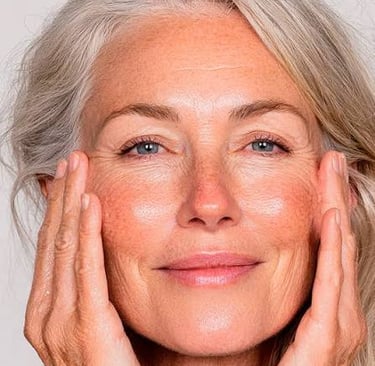
You catch your reflection in bright light and your eyes go straight to the lines.
Not your smile. Not your skin. Just the crow’s feet that seem deeper than they were a few months ago.
That can be a hard feeling to shake.
Especially when you've done what you're supposed to do. You wear sunscreen. You moisturize. Maybe you've even used retinol faithfully. Yet somehow those fine lines keep showing up in photos, mirrors, and video calls.
The frustrating part is that crow’s feet aren't just caused by age. They're caused by movement, thinning skin, declining collagen, and years of tiny expressions that eventually leave their mark.
That's why retinol, while helpful, isn't always the answer people expect.
Retinol works by encouraging skin cell turnover and supporting collagen production over time. It can soften the appearance of fine lines. But the skin around your eyes is thinner than almost anywhere else on your face. That makes results slower and irritation more common.
Some people use stronger and stronger products, assuming more intensity means better outcomes.
Often, it doesn't.
What tends to help faster is focusing on the factors that actually make crow’s feet look more noticeable.
Consistent hydration matters more than most people realize. When the skin around your eyes becomes dehydrated, lines appear sharper and deeper. A well-formulated moisturizer with ingredients like hyaluronic acid can temporarily plump the skin surface and reduce that creased appearance.
Sleep quality plays a role too.
Poor sleep increases inflammation and can affect how your skin repairs itself overnight. You can often see the difference around the eyes first because that skin is so delicate.
Protein intake deserves attention as well. Collagen doesn't magically appear because a cream promises it. Your body needs the raw materials to build and maintain skin structure. When nutrition slips, the effects often show up in the face.
Then there's sun exposure.
Even brief daily exposure adds up over years. A woman who never misses her moisturizer but skips sunglasses during afternoon walks may unknowingly be accelerating the very lines she's trying to prevent. Squinting creates repeated stress on the skin around the eyes.
Facial tension can have a similar effect.
Some people spend hours concentrating at a computer with their eyes slightly narrowed. They aren't aware they're doing it. Yet those repetitive movements reinforce the same creases day after day.
This is where many people get stuck.
They treat crow’s feet as a surface problem because the lines appear on the surface.
But the wrinkle you see is often the final result of changes happening underneath the skin long before the line becomes visible.
That realization changes how you look at aging skin.
Instead of asking which cream can erase a line, you start asking why the skin lost the support that kept that line from forming in the first place.
That's a very different question.
And it's usually the question that leads people to make sense of why certain products help only a little while others seem to do nothing at all.
If you've been staring at the mirror wondering when your face started looking older than you feel inside, you're not imagining the change.
But you're also not seeing the full story.
The visible line is only one piece of what's happening.
I understand the skepticism. If you've tried enough products, you've earned it.
After going through this myself, I put together a short free video that goes deeper into exactly this and explains what may be contributing to crow’s feet beneath the surface of the skin.
You'll come away understanding why aging around the eyes can seem to speed up suddenly, and what factors deserve attention before those lines become more noticeable. The reality is that skin changes rarely slow themselves down, and understanding what's happening sooner gives you more options than waiting another year.
✨ Ageless Skin Secret
This website contains affiliate links. If you make a purchase through one of these links, I may receive a small commission at no additional cost to you. The experiences shared on this site are personal and individual. Results are not guaranteed and can vary from person to person. All content is provided for informational purposes only and should not be considered medical advice. Always speak with a qualified healthcare professional before beginning any new health protocol or supplement.
Contact
legal
© 2024. All rights reserved.